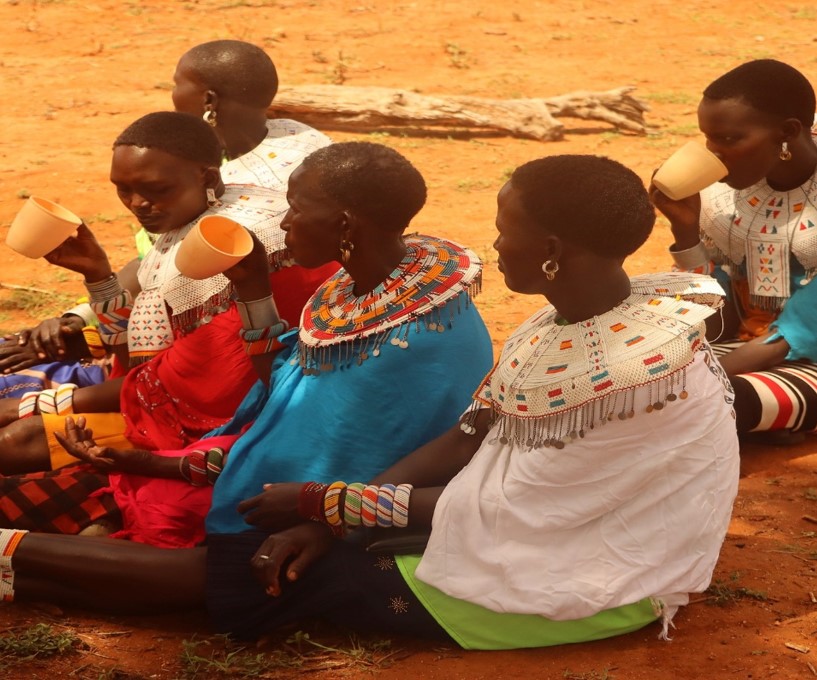
Slide 1

Donate to help us empower local residents of all age groups to enhance their living standards in pastoralist communities.

Our Vision

To build strong, healthy and resilient community.

Our Mission

Empowering pastoralists communities towards self-sufficiency and a brighter future through community engagement and sustainable solutions.

About Us

Hope For Samburu Communities (HFSC)

Hope for Samburu Communities is a registered community-based organization dedicated to improving the quality of life for residents in Samburu County, particularly in Samburu North, Samburu East and Samburu West sub-counties

Our mission is to motivate and empower local residents of all age groups to enhance their living standards. We demonstrate how to utilize available resources to generate income and solve domestic problems at the household level. HFSC believes in community solidarity, recognizing that mutual support opens new opportunities and ensures the successful implementation of our programs.

Male engagement initiative in Lulu, bringing together participants from Lpusi, Sunoni, Ishalai, and Lulu. Our mission? To sensitize our community about the urgent need to fight gender-based violence (GBV) and promote equality in decision-making regarding land rights.
Our Programs

What We Are Doing

Gender-Based Violence

GBV is a critical issue in Samburu County, influenced by cultural, social, and economic factors. HFSC focuses on understanding these factors, implementing awareness and education programs and strengthening legal and policy frameworks. We establish support services for GBV survivors, empower women and girls economically and engage community leaders to change social norms.

Education

HFSC aims to reduce barriers to education for pastoralist children by raising awareness about the importance of education and rescuing school dropouts. We focus on creating educational opportunities and support systems to ensure every child can pursue their career goals. By addressing the unique challenges faced by pastoralist communities, we strive to make quality education accessible to all.

Health and Nutrition

We focus on preventing malnutrition among vulnerable groups, including pregnant and lactating women, children aged 6-59 months, and the elderly. Our efforts include conducting mass screenings in remote villages to identify those in need. We then refer eligible clients to the nearest health facilities for continuous nutritional support, intervention, and follow-up, ensuring they receive the care they need to thrive.

Climate Change

Climate change poses significant challenges to Samburu County. HFSC's response strategies include investing in water infrastructure and promoting water conservation, supporting sustainable agriculture and livestock practices, and protecting biodiversity through conservation efforts. We address health impacts related to climate change, and engage communities in climate adaptation and mitigation efforts.

metrics

Ongoing Impact

Trees Planted
0 +
Farmers Groups Trained
0 +
GBV Survivors Reached
0 +
Skilling Participant Enrolled to Various TVET
0 +

Leave no One Behind

Committed to Sustainable Development

Zero Hunger (SDG 2)

HFSC works to combat hunger in Samburu County by addressing malnutrition among vulnerable groups and promoting sustainable agricultural practices to ensure food security despite the challenges posed by climate change.

Good Health and Well-being (SDG 3)

HFSC focuses on improving health and nutrition, providing support for pregnant and lactating women, children, and the elderly. This includes mass screenings, nutritional interventions, and continuous support to enhance overall health and well-being.

Quality Education (SDG 4)

HFSC aims to reduce barriers to education for pastoralist children by raising awareness about the importance of education, rescuing school dropouts, and creating educational opportunities to help children pursue their career goals.

Gender Equality (SDG 5)

HFSC addresses gender-based violence, promotes gender equality, and empowers women and girls economically. By implementing awareness programs, strengthening legal frameworks, and engaging community leaders, HFSC works to create a more equitable society.

Staff

Our Team

Content coming soon

Jacob Letipila

Jacob Letipila

Founder & Executive Director

Content coming soon

Progress reports

News & Blogs

We do not Walk Alone...

Our Trusted Partners

Do You Care About What We Do?

📣 Save the date | 14 April, 13:00–14:00 BSTWebinar: Sustainable use of wild species in a changing worldWild species support the lives and livelihoods of millions of people worldwide. But what does it mean to use them sustainably, equitably and safely?Join the launch of the Sustainable Use of Wild Species Transformative Partnership Platform (SU-TPP) for a conversation exploring regional perspectives from Latin America, Africa and Asia.This online event will bring together experts and partners to discuss how wild species are monitored, how their use is governed, and how research, policy and practice can better work together to support biodiversity, livelihoods and food systems.💻 OnlineLearn more and register:🔗 bit.ly/40v3gIxPartners: University of Oxford | Manchester Metropolitan University | International Institute for Environment and Development (IIED) | IIFB |#SustainableUse #SUTPP #TreesPeoplePlanet ... See MoreSee Less
View on Facebook
Today we were honored as COG implementing Visibilized4climateAction project in Samburu East to participate in the LDSF community training on Land Degradation Surveillance Framework (LDSF) organized by CIFOR-ICRAF in partnership with African Population and Health Research Center.The training focused on strengthening local capacity to monitor and restore degraded landscapes using innovative tools and scientific approaches. Participants were introduced to a very important digital tool the Regreening App which is used to track restoration interventions. The app features five key modules: FMNR (Farmer Managed Natural Regeneration), Tree Planting, Tree Nursery, Rangeland, and Community Engagement.Through this training, participants gained valuable hands-on experience and knowledge from CIFOR-ICRAF scientists. On Key learning areas include the use of transect lines in the rangeland module, measuring and identifying trees, shrubs, and grass species, recording soil erosion, and assessing water infiltration capacity.This initiative is a significant step toward empowering communities to take an active role in restoring their landscapes and building resilience against land degradation.#hopeforsamburu #ldsf #landrestoration #Regreening #CommunityEmpowerment ... See MoreSee Less
View on Facebook
We strongly condemn any form GBV against women and girls in our county. We encourage our communities to continue reporting all forms of GBV through 1195. ... See MoreSee Less
View on Facebook